 By 247 spider solitaire
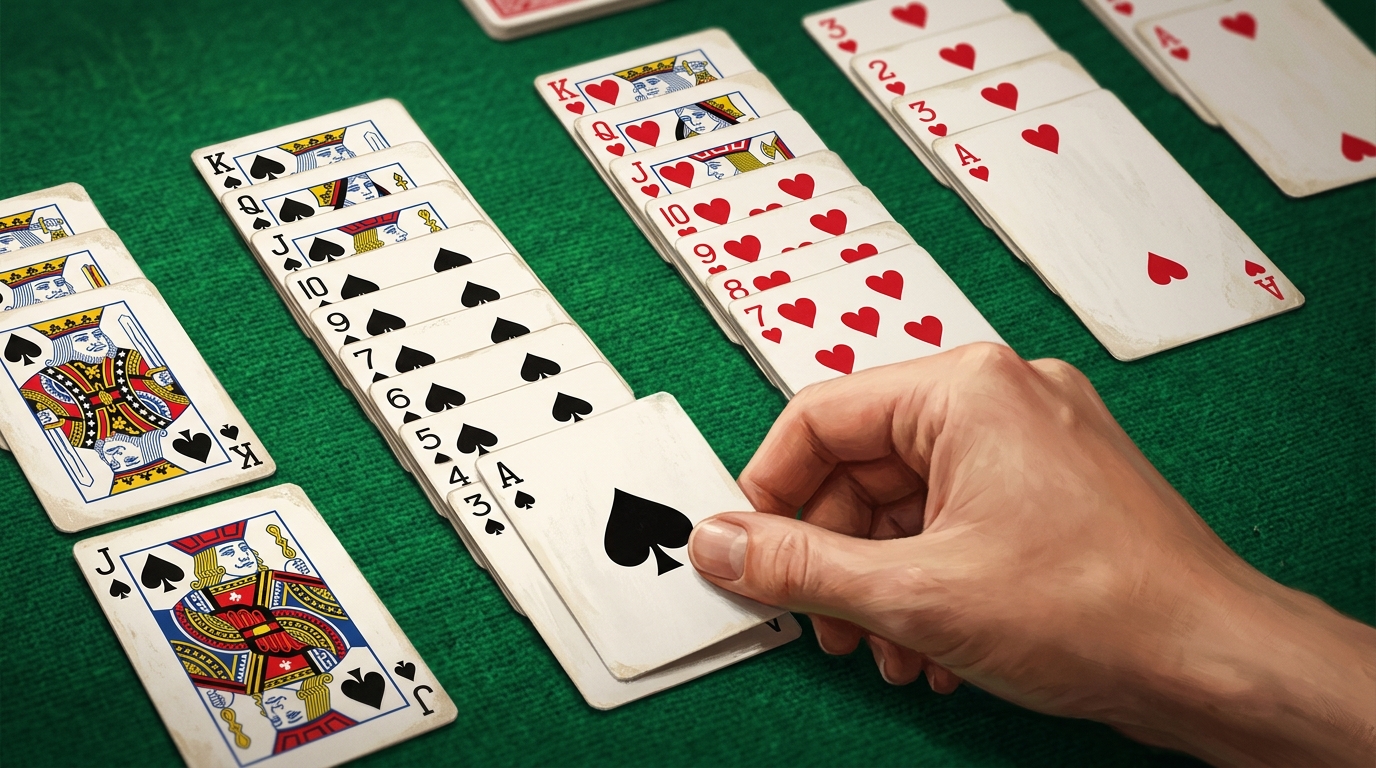
247 Spider Solitaire can look casual until a player starts watching the clock. Challenge play makes familiar layouts feel different because every empty column and stock deal becomes a decision with a cost. Competition does not have to mean a giant stadium or a prize table. It can be a clean time, a better score, a longer streak, or the simple challenge of making fewer weak moves than yesterday. That is the useful side of competitive puzzle play: it turns attention into something a player can measure without losing the calm that made the game appealing.
247 Spider Solitaire in practice
A solo game can still create a race
Spider Solitaire competition rarely looks like a traditional tournament hall. It appears as a timer, a score, a streak, a challenge board, or the private goal of solving more cleanly than yesterday. The pressure is real because every move changes the number of future options. A fast but careless player can lose more time repairing a blocked column than a slower player spends planning.
High-level play is therefore less about clicking quickly and more about identifying the move with the best information return. Does it uncover a card? Does it create a useful empty column? Does it keep a same-suit run intact? Those questions are more valuable than a raw move count.
Challenge habits that transfer
A good challenge session has a rule for review. When the board fails, look for the first move that reduced flexibility, not only the final dead end. Notice whether a stock deal was taken before the tableau was ready, whether an empty column was filled with a short run, or whether a mixed-suit stack was moved too soon. The review turns a loss into a map for the next attempt.
That is why Spider can feel competitive without needing a public leaderboard. The player has a visible record of decisions and a clear way to improve them.
Make the score useful
Open a new Spider challenge on Easy Daily Puzzle and browse related posts here. Microsoft’s Solitaire history explains the digital tradition, while the Spider rules page) helps separate formal rules from platform-specific scoring.
A fair challenge for an ordinary session
Before making a move, count the useful spaces on the board. Empty columns, reachable face-down cards, and same-suit runs are not equal, but they are all forms of leverage. A move that preserves two of them may be stronger than a move that creates one attractive stack. This is why Spider often rewards restraint even when several legal moves are available.
Mixed-suit stacks deserve special attention. They can move, but they usually cannot be treated as one clean unit until the suits align. If you move one too early, you may bury a card that would have repaired another column. Try to expose information before you rearrange the visible surface.
Treat the stock as a commitment. Once a deal adds cards to every column, the board may lose the clean spaces you were protecting. Use the visible tableau first, then deal when the remaining moves are genuinely limited. After the deal, pause and identify the new longest run, the new blocked column, and the card that became reachable.
For the next session, play a Spider board on Easy Daily Puzzle and browse more Spider Solitaire strategy on this site. A good review asks which move reduced future choices. That question improves planning more reliably than simply replaying the same board until it finally works.
The small detail worth remembering
The strongest Spider move is often the one that improves the next three moves rather than the one that looks best immediately. Empty columns, hidden cards, and same-suit runs are resources. Spend them when the board gives you a clear return.
A loss can still be a good session if it reveals the cost of one decision. Review the first moment when the tableau became less flexible, then enter the next deal with that specific warning in mind. Planning grows from concrete mistakes.
When several moves look legal, choose the one that reveals the most information while preserving the most space. That single filter removes many attractive but unhelpful clicks.
For a little more context, read Microsoft’s history of Solitaire on Windows and Spider Solitaire background. These references are useful for checking the basic history or rules without turning a daily game post into a long reference list.