 By 247 spider solitaire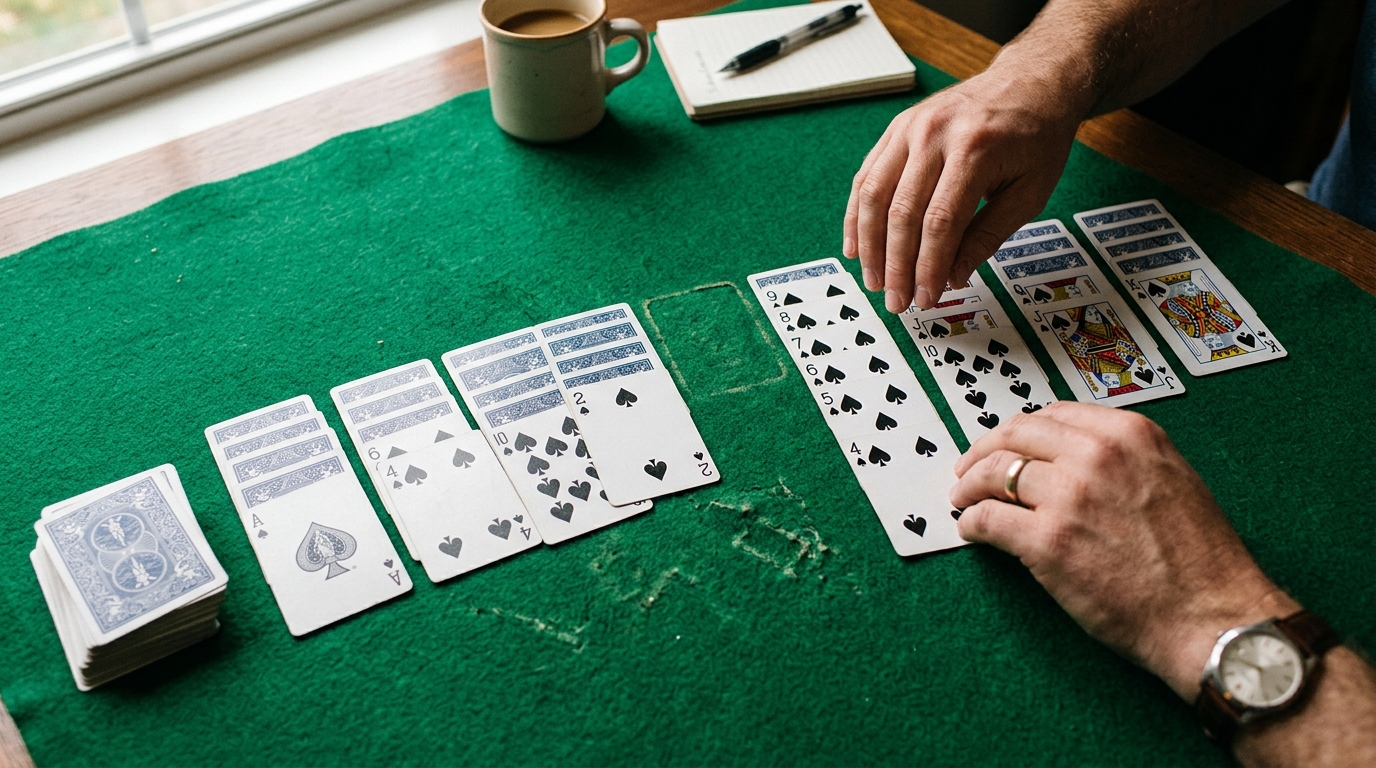
Spider Solitaire European origins provides curious players with a fresh, captivating perspective on why Spider Solitaire remains one of the most rewarding mental challenges in the modern world. Whether you are taking a well-earned coffee break at your desk, relaxing on your daily commute, or unwinding in the quiet evening hours, a single puzzle session creates an oasis of calm deductive clarity in a busy day. Here on 247 Spider Solitaire, we are committed to sharing the rich background, tactical nuances, and practical wisdom that elevate your everyday puzzle experience.
You can put these concepts to the test immediately on the 247 Spider Solitaire interactive board. To explore a vast world of daily brain teasers, crosswords, jigsaws, and classic card puzzles, visit Easy Daily Puzzle or discover our curated collection of Spider Solitaire games on Easy Daily Puzzle.
Spider Solitaire European origins: the story and strategic heritage of Spider Solitaire
Spider Solitaire traces its heritage to nineteenth-century European patience card traditions that used two complete 52-card decks. The name Spider was inspired by the eight tableau sequences that the player must construct, mirroring the eight legs of an arachnid. Early references appear in European game compendiums from the 1930s, where the game gained a reputation as one of the most intellectually demanding solitary card challenges ever conceived. Unlike simple games of chance, Spider gave the player tremendous agency, rewarding foresight and careful sequence building. This rich foundation ensured that when computer software designers sought a compelling multi-deck card game for modern operating systems, Spider stood at the top of the list.
Exploring the deeper aspects of Spider Solitaire European origins reveals why simple games continue to hold such profound power over the human imagination. Behind every elegant grid, card tableau, or interlocking pattern lies a deliberate balance between order and chaos, designed to challenge our pattern recognition and problem solving faculties. When modern solvers understand these underlying principles, the game transforms from a casual pastime into a deeply satisfying mindful practice. Every round becomes an opportunity to refine your approach, test your hypotheses, and experience the quiet joy of finding the right move.
Historical records and trusted sources behind Spider Solitaire European origins
Separating documented puzzle heritage from popular hearsay requires consulting authoritative historical and gaming records. For readers eager to examine archival rulebooks, championship history, and technical analyses, reference materials such as Bicycle Cards official Spider Solitaire rules and David Parlett on historical patience card games offer exceptional factual depth. These trusted publications document the creators, innovators, and international communities who have nurtured these games over centuries. Whether you are researching tournament scoring systems, mathematical proofs, or cultural origins, verified sources ground our modern play in enduring traditions.
How Spider Solitaire European origins guides player decisions in real games
Imagine a complex tableau with several mixed-suit sequences and one freshly cleared empty column. The hasty reaction is parking any convenient card into that open lane just to tidy up the display. Remembering Spider Solitaire European origins prompts you to ask how that valuable space can achieve maximum impact: will it reveal a critical face-down card or help untangle a broken suit run? Preserving your open lanes and delaying fresh deals from the stock until every tableau move is squeezed out is the master key to boosting your win rate.
Spider Solitaire is a game of tempo, patience, and spatial mobility. Treating empty columns as dynamic temporary workbenches rather than permanent storage closets completely transforms your command over the board. By systematically staging partial sequences across multiple lanes, you can dismantle stubborn mixed stacks and restore pure single-suit runs that clear cleanly.
Essential player habits connected to Spider Solitaire European origins
- Focus every initial sequence on uncovering buried face-down cards rather than tidying visible ones.
- Protect empty columns with extreme discipline to use them as staging transfer stations.
- Treat mixed-suit sequences as temporary scaffolding to be repaired into pure single suits.
- Exhaust every conceivable tableau rearrangement before dealing ten new cards from the stock.
Why clean visual design elevates Spider Solitaire European origins
A clean, distraction-free visual presentation is essential for enjoying Spider Solitaire on modern devices. The featured illustration accompanying this article has been selected to showcase the focused, calm atmosphere of deliberate play. Pairing clear visual graphics with descriptive alt text highlighting Spider Solitaire European origins ensures that solvers can comfortably connect theory with on-screen action. Whether you are playing on a high-resolution desktop monitor or a compact mobile screen, sharp contrast and thoughtful interface design keep your focus squarely on the pleasure of solving.
Taking your next step with Spider Solitaire European origins
The most enjoyable way to appreciate the power of Spider Solitaire European origins is to dive into an actual round today with these fresh insights in mind. Head over to 247 Spider Solitaire for a relaxing, high-quality session where thoughtful strategy replaces rushed guessing. Whenever you want to expand your puzzle horizons with fresh daily challenges, explore the comprehensive Easy Daily Puzzle library for endless daily mental stimulation. Every completed puzzle is a testament to the timeless joy of clear logic, patient observation, and a well-played game.